
Description
| Sunflower oil, high oleic (70% and over) | |
| Nutritional value per 100 g (3.5 oz) | |
| Energy | 3,699 kJ (884 kcal) |
| Carbohydrates | 0 g |
| Fat | 100 g |
| Saturated | 9.748 g |
| Monounsaturated | 83.594 g |
| Polyunsaturated | 3.798 g |
| Protein | 0 g |
| Vitamins and minerals | |
₹140.00
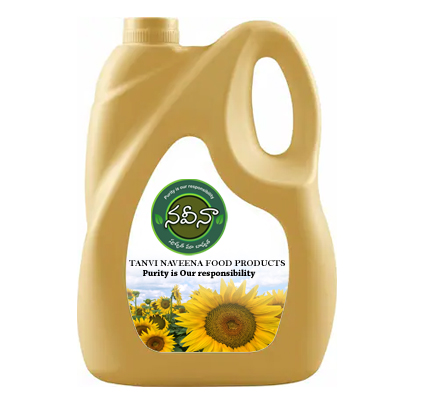
Sunflower oil is the non-volatile oil pressed from the seeds of the sunflower (Helianthus annuus). Sunflower oil is commonly used in food as a frying oil, and in cosmetic formulations as an emollient.
Sunflower oil is primarily composed of linoleic acid, a polyunsaturated fat, and oleic acid, a monounsaturated fat. Through selective breeding and manufacturing processes, oils of differing proportions of the fatty acids are produced. The expressed oil has a neutral taste profile. The oil contains a large amount of vitamin E.
The Russian invasion of Ukraine that began in 2022 caused global prices of sunflower oil to increase by as much as 58% in a single month in 2022.
Composition
Sunflower oil is mainly triglycerides (fats), typically derived from the fatty acids linoleic acid and oleic acidSunflower oil is mainly a triglyceride.[5] The British Pharmacopoeia lists the following profile:[6][dubious – discuss]
Palmitic acid (saturated): 5%
Stearic acid (saturated): 6%
Oleic acid (monounsaturated omega-9): 30%
Linoleic acid (polyunsaturated omega-6): 59%
Four types of sunflower oils with differing concentrations of fatty acids are produced through plant breeding and industrial processing: high-linoleic (conventional), high-oleic, mid-oleic, and high-stearic combined with high-oleic.
High-linoleic, 69% linoleic acid
High-oleic, 82% oleic acid
Mid-oleic, 65% oleic acid
High-stearic with high-oleic, 18% stearic acid and 72% oleic acid
| Sunflower oil, high oleic (70% and over) | |
| Nutritional value per 100 g (3.5 oz) | |
| Energy | 3,699 kJ (884 kcal) |
| Carbohydrates | 0 g |
| Fat | 100 g |
| Saturated | 9.748 g |
| Monounsaturated | 83.594 g |
| Polyunsaturated | 3.798 g |
| Protein | 0 g |
| Vitamins and minerals | |

Sesame oil is an edible vegetable oil derived from sesame seeds. The oil is one of the earliest-known crop-based oils. Worldwide mass modern production is limited due to the inefficient manual harvesting process required to extract the oil. Oil made from raw seeds, which may or may not be cold-pressed, is used as a cooking oil. Oil made from toasted seeds is used for its distinctive nutty aroma and taste, although it may be unsuitable for frying, which makes it taste burnt and bitter.

Grape seed oil (also called grapeseed oil or grape oil) is a vegetable oil derived from the seeds of grapes. Grape seeds are a winemaking by-product, and oil made from the seeds is commonly used as an edible oil.
Grape seed oil has a moderately high smoke point of approximately 216 °C (421 °F). The oil has a light taste and a high polyunsaturated fat content, making it suitable for use in salad dressings, mayonnaise and as a base for oil infusions of garlic, rosemary, or other herbs or spices. It is widely used in baked goods, pancakes, and waffles. It is sprayed on raisins to help them retain their flavor.

Total saturated 25% Myristic: 0.6% Palmitic: 21.5% Stearic: 2.9% Unsaturated fats Total unsaturated 75% Monounsaturated 38% Oleic acid 38% Polyunsaturated 37% Omega−3 fatty acids α-Linolenic: 2.2% Omega−6 fatty acids Linoleic: 34.4% Properties Food energy per 100 g (3.5 oz) 3,700 kJ (880 kcal) Smoke point 232 °C (450 °F) Iodine value 99-108 Acid value 1.2 Saponification value 180-190 Unsaponifiable 03-May

Mustard oil was likely produced in the ancient Jewish town of Huqoq, in modern-day Israel. This is suggested by distinctive agricultural features found there, such as semi-circular wine vats with steep slopes and lower troughs. Scholars believe these structures, dating to Roman or Byzantine times, were used to crush mustard pods to make oil. Mustard production in Huqoq is also documented in the Jerusalem Talmud.
Chemical composition
Its pungent flavor is due to allyl isothiocyanate, a phytochemical of plants in the mustard family, Brassicaceae (for example, cabbage, horseradish or wasabi).
Mustard oil has about 60% monounsaturated fatty acids (42% erucic acid and 12% oleic acid); it has about 21% polyunsaturated fats (6% the omega-3 alpha-linolenic acid and 15% the omega-6 linoleic acid), and it has about 12% saturated fats.

Rapeseed oil is one of the oldest known vegetable oils. There are both edible and industrial forms produced from rapeseed, the seed of several cultivars of the plant family Brassicaceae. Historically, it was restricted as a food oil due to its content of erucic acid. Laboratory studies about this acid have shown damage to the cardiac muscle of laboratory animals in high quantities. It also imparts a bitter taste, and glucosinolates, which made many parts of the plant less nutritious in animal feed. Rapeseed oil from standard cultivars can contain up to 54% erucic acid.
Canola oil is a food-grade version derived from rapeseed cultivars specifically bred for low acid content. It is also known as low erucic acid rapeseed (LEAR) oil and is generally recognized as safe by the United States Food and Drug Administration. Canola oil is limited by government regulation to a maximum of 2% erucic acid by weight in the US and the EU, with special regulations for infant food. These low levels of erucic acid do not cause harm in humans.
In commerce, non-food varieties are typically called colza oil.
Rapeseed is extensively cultivated in Canada, India, France, Belgium, Ireland, the United Kingdom, the United States, the Netherlands, Germany, Denmark, Poland, Japan and Slovenia. In France and Denmark especially, the extraction of the oil is an important industry.

Select at least 2 products
to compare
Reviews
There are no reviews yet.